
Why certificate formats multiply, what it costs your portfolio view, and what one consistent shape actually requires.
One borrower sends an Excel file with aging buckets of 30, 60 and 90 days. Another sends a PDF with 31–60 and 61–90. A third sends a scan of a signed form, with the agings attached separately, sometimes.
Each format is reasonable on its own. Together, they mean your team spends month-end translating instead of reviewing.
Ineligibles and concentrations mean different things borrower to borrower, so portfolio totals are only as reliable as the translation behind them.
Capacity grows with the number of formats, not just the number of facilities.
When the analyst who knows a borrower's file is away, month-end slows down.
| APPROACH | WHAT HAPPENS | WHERE IT STALLS |
|---|---|---|
| Mandate one template | Borrowers are asked to switch formats | Adoption is slow, and older formats keep arriving |
| Analysts normalize by hand | The team rekeys everything into a master spreadsheet | Works, but every certificate costs analyst time, and errors are hard to catch |
| Build an internal tool | IT or a data team builds intake and mapping | Joins the IT backlog; maintenance never ends |
One set of field definitions, so "eligible receivables" means the same thing for every borrower.
Each borrower's own agreement terms applied on top of the common shape.
Submissions captured where they arrive, with a record of when.
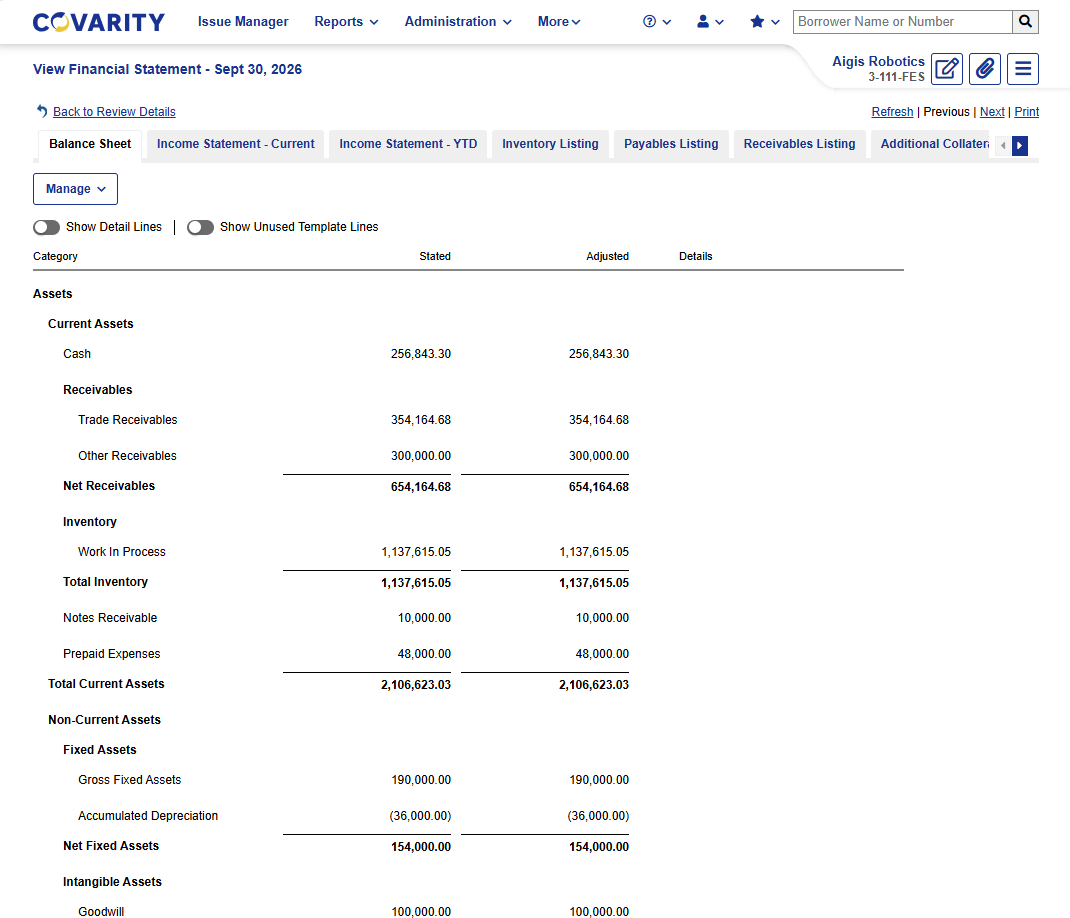
Calculation that happens on submission, not after rekeying.
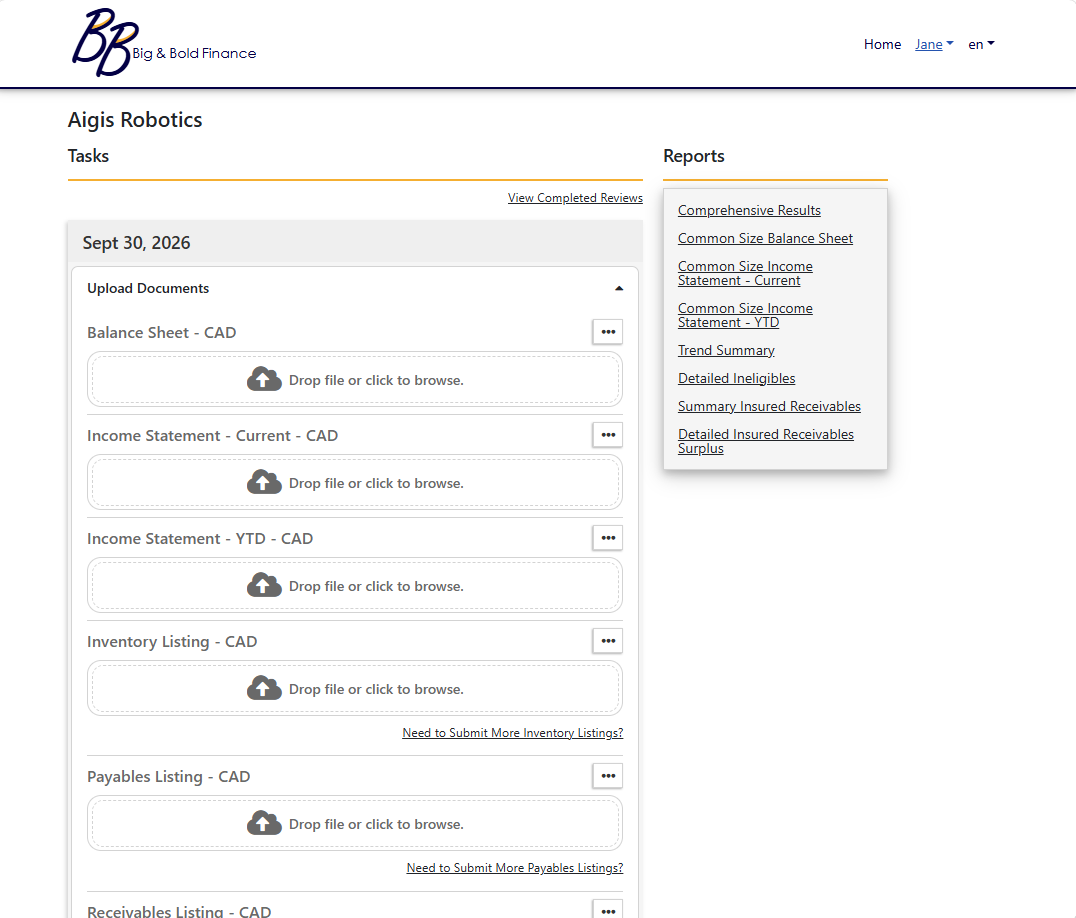
Borrowers submit through Covarity's borrower portal. Each submission lands in one consistent structure, eligibility rules and limits are applied automatically, and availability is calculated without rekeying.
There are two ways for borrower data to come in, and you choose which one applies to each borrower.
The borrower keys in their certificate in the Client Portal. It's the same information they prepare today, entered in one place instead of sent as a file.
The borrower submits full receivables and inventory listings, so your team can analyse the collateral at a finer level of detail.
The choice is yours, borrower by borrower, based on your appetite for risk and the size of the loan. Many lenders keep smaller loans on certificates and move larger loans to full listings.
A 20-minute walkthrough of how borrower submissions come in and what your team sees.
Book a 20-minute walkthrough